

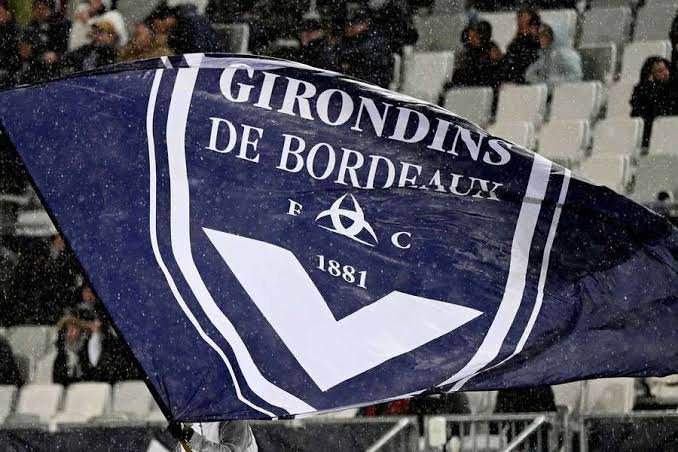
A six-time French champion, the club that produced Zinedine Zidane, one of the most storied names in French football, was sold at the end of September 2026 for exactly one euro. That is not a typo or a symbolic gesture dreamed up by a marketing team. It is the actual price that the British fund Park Bench paid Gérard Lopez to take control of the Girondins de Bordeaux. And yet, as striking as it looks in a headline, the one-euro price tag is probably the least interesting number in the whole deal. What sits underneath it is a textbook case of distressed M&A and corporate restructuring, the kind of situation that restructuring advisors, special-situations funds, and turnaround specialists spend their careers navigating, and it happens to be playing out on one of the most emotional stages in sport.
How a historic club ends up worth one euro
To understand why a club with this much history can change hands for the price of a coffee, you have to look at what the Lopez era did to the balance sheet. When the Spanish-Luxembourg businessman took over, Bordeaux were a Ligue 1 club with a professional structure and a famous academy. By the summer of 2026, after losing their top-flight status in 2022 and sliding down the French football pyramid, the club had fallen an astonishing five divisions in five years and ended up in Régional 1, which is amateur, regional football. According to figures relayed by the French press, the Lopez years left behind roughly 94 million euros of debt, more than 400 unpaid companies, and 86 layoffs, with the total liability at one point reported by the commercial court at around 118 million euros before it started coming down.
When a company accumulates that scale of liabilities against a shrinking revenue base, something important happens from a financial perspective. The equity value of the business, meaning what the owners’ stake is actually worth once you subtract everything the company owes, collapses toward zero and can even turn negative. The club still has a brand, a fan base, a 42,000-seat stadium to play in, and a footballing activity that generates some revenue, but all of that value is effectively owed to creditors before it reaches shareholders. In that situation, the equity is worth nothing, which is exactly why it changes hands for a single euro.
Why anyone pays one euro for a company
This is the part that confuses people outside finance, and it is the most useful lesson in the entire story. Paying one euro for a company does not mean you are getting it for free. It means the equity itself has no value, and that the real cost of the deal sits entirely in the obligations you agree to take on.
When Park Bench bought Bordeaux, they were not paying for a profitable going concern with money in the bank. They were agreeing to step into a distressed situation and assume responsibility for keeping it alive. The one euro changes ownership of the shares. The genuine price is everything that comes attached: the debt the buyer agrees to carry, the capital they commit to inject, and the operational burden of running a club that has lost its professional status. In distressed M&A, the headline price and the actual cost of a transaction are almost never the same thing, and Bordeaux is about as clean an illustration of that gap as you will find.
The restructuring machinery behind the deal
None of this would have been possible without a heavy restructuring of the club’s debt, and the mechanics are worth slowing down on because they are genuinely instructive. The continuation plan validated in 2025 had already done the first wave of heavy lifting, dragging the liability down from around 94 million euros to roughly 26 million. That reduction did not happen by magic. It happened because a large number of creditors accepted write-offs, agreeing to recover only part of what they were owed, often spread over a decade, on the logic that a partial recovery from a surviving club beats a full claim against a liquidated one.
The most technical and most revealing feature of the process was the cross-class cramdown. In a restructuring, creditors are sorted into different classes, and not every class is happy to accept a haircut. In Bordeaux’s case, the plan was approved by creditors representing around 70 percent of the debt, covering ten of the fifteen classes, but some creditors refused. Bordeaux Métropole, owed roughly 12 million euros in unpaid stadium rent, voted against a plan that offered it only a fraction of its claim. Under a cross-class cramdown, the court can impose the plan on the dissenting classes anyway, overriding their refusal because the overall restructuring is judged to be in everyone’s broader interest. That is a powerful legal tool, and seeing it applied to a football club rather than a failing industrial group is a reminder that clubs, for all their cultural weight, are legally just companies in difficulty.
Park Bench then pushed the restructuring one step further. On top of the creditor write-offs already secured, the fund brought the assumed debt down to around 13 million euros, now repayable over twelve years, and Gérard Lopez walked away not only from his ownership but also from his own substantial claims against the club, including his return-to-better-fortune clause, a provision that would have let him recover money if the club recovered financially. Reports also point to a capital injection from Park Bench of roughly 18 million euros to fund the rebuild, which tells you where the real money in this deal actually went.
What Park Bench actually bought
Strip away the emotion and the one-euro headline, and what Park Bench acquired is best understood as an option. For a modest assumed debt of around 13 million euros stretched over more than a decade, plus an upfront injection to get the club functioning, the fund gains control of a historic brand with deep name recognition, a loyal and sizeable support base, and a 42,000-seat stadium built for Euro 2016, even if that stadium is owned by the local metropolitan authority rather than the club itself. The downside is contained by the restructuring, since the crushing debt has already been negotiated away, and the upside is the possibility of a famous club climbing back up the divisions and rebuilding commercial value along the way.
This is the core logic of distressed investing applied to football. You buy the asset at the bottom of its cycle, once the liabilities have been cleaned up through a legal process, and you bet that patient capital plus competent management can restore enough of the lost value to make the whole thing worthwhile. The brand was built over more than a century. The debt, in theory, has been contained to a manageable figure. If the recovery works, the entry price looks like one of the great bargains in football. If it does not, the fund has still capped much of its exposure through the structure of the deal.
Why it is still far from a clean win
The optimism has to be balanced against some hard realities, because a bargain entry price does not guarantee a profitable exit. Régional 1 is amateur football, which means the club is currently generating a tiny fraction of the revenue it once pulled in as a Ligue 1 side, with no broadcasting money of any real significance and sharply reduced commercial and matchday income. Climbing back through the French football pyramid is slow, uncertain, and expensive, with no guarantee of promotion in any given season. The twelve-year repayment schedule, while comfortable compared with the original debt mountain, is still a long obligation hanging over a club whose income is now modest. And the economics of a 42,000-seat stadium make a lot more sense for a top-flight club than for a regional amateur side trying to fill it.
In other words, Park Bench has bought a long-dated, illiquid, operationally demanding turnaround, the kind of bet that only makes sense with a multi-year horizon and a tolerance for the possibility that it simply does not come off. The restructuring solved the balance sheet. It did not solve the business, and rebuilding the business is the far harder part.
The takeaway
Headlines about football clubs being sold for one euro tend to get filed under absurdity or charity, but neither label is right. The one euro is a precise financial signal, telling you that the equity value of the business had fallen to zero, nothing more and nothing less. The real transaction lives in the assumed liabilities, the capital commitments, the creditor write-offs, and the legal machinery that made the whole thing possible, from the continuation plan to the cross-class cramdown. Bordeaux is a historic football institution and an emotional story for anyone who followed French football in its glory years, but it is also, right now, one of the most concrete and accessible examples of distressed M&A and restructuring you could hope to study, with every major concept in the playbook compressed into a single, very public deal.