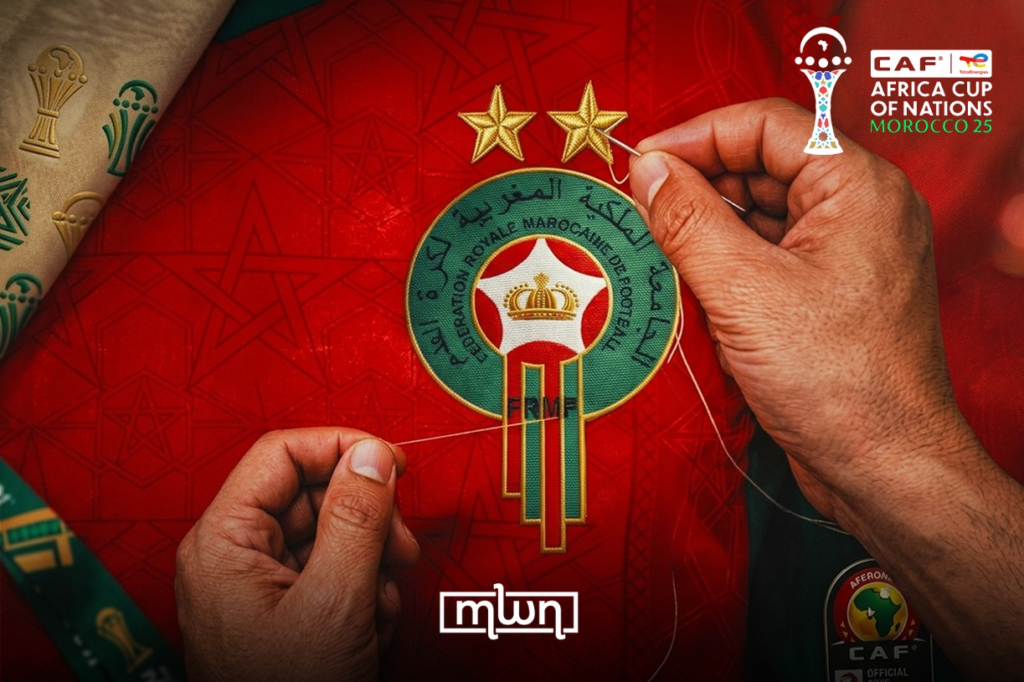
On January 18, 2026, in Rabat, the Africa Cup of Nations final was supposed to be a celebration of African football at its finest. It became one of the most controversial sporting events in recent memory, watched by tens of millions across the continent and beyond.
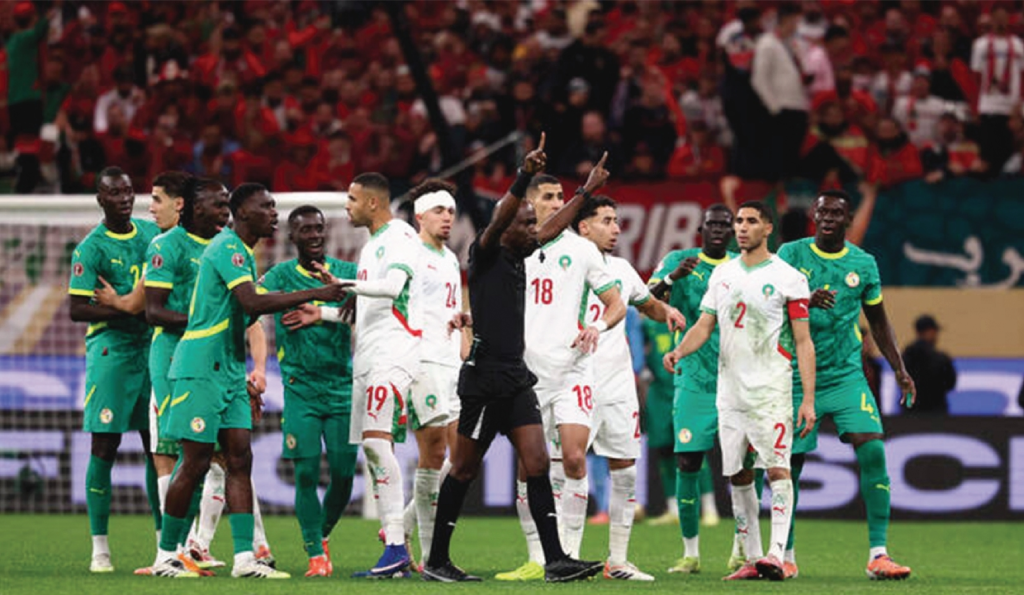
The incidents did not emerge from nowhere. Throughout the match, provocations accumulated without clear response from the referee: contested calls, a VAR system treated more like a suggestion box than a binding authority, ball boys caught tampering with the opposing goalkeeper’s equipment, and in one of the most brazen acts of the night Senegal’s goalkeeper deliberately approaching Brahim Díaz seconds before his penalty kick to whisper in his ear. An act of pure intimidation, explicitly prohibited under the laws of the game.
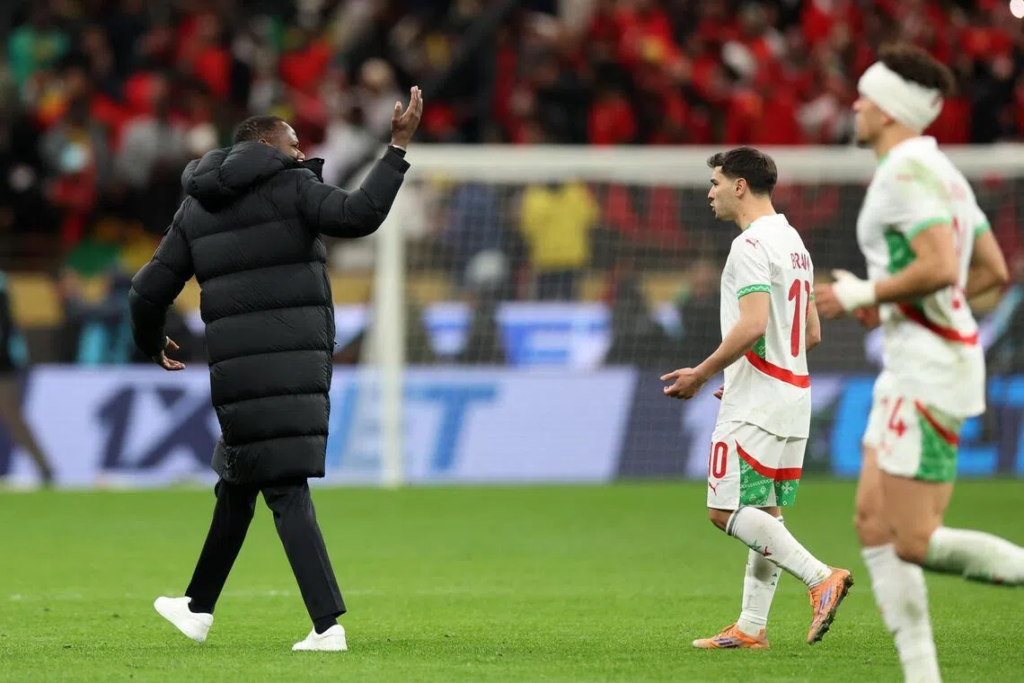
Then came the breaking point. When the referee awarded a penalty to Morocco deep into stoppage time, Senegalese coach Pape Thiaw made a decision that would define his legacy: he walked his players off the pitch and held the entire final hostage for seventeen minutes. Not a brief protest. Not a heated exchange on the touchline. A deliberate, prolonged abandonment of the field of play, broadcasted live to the world.
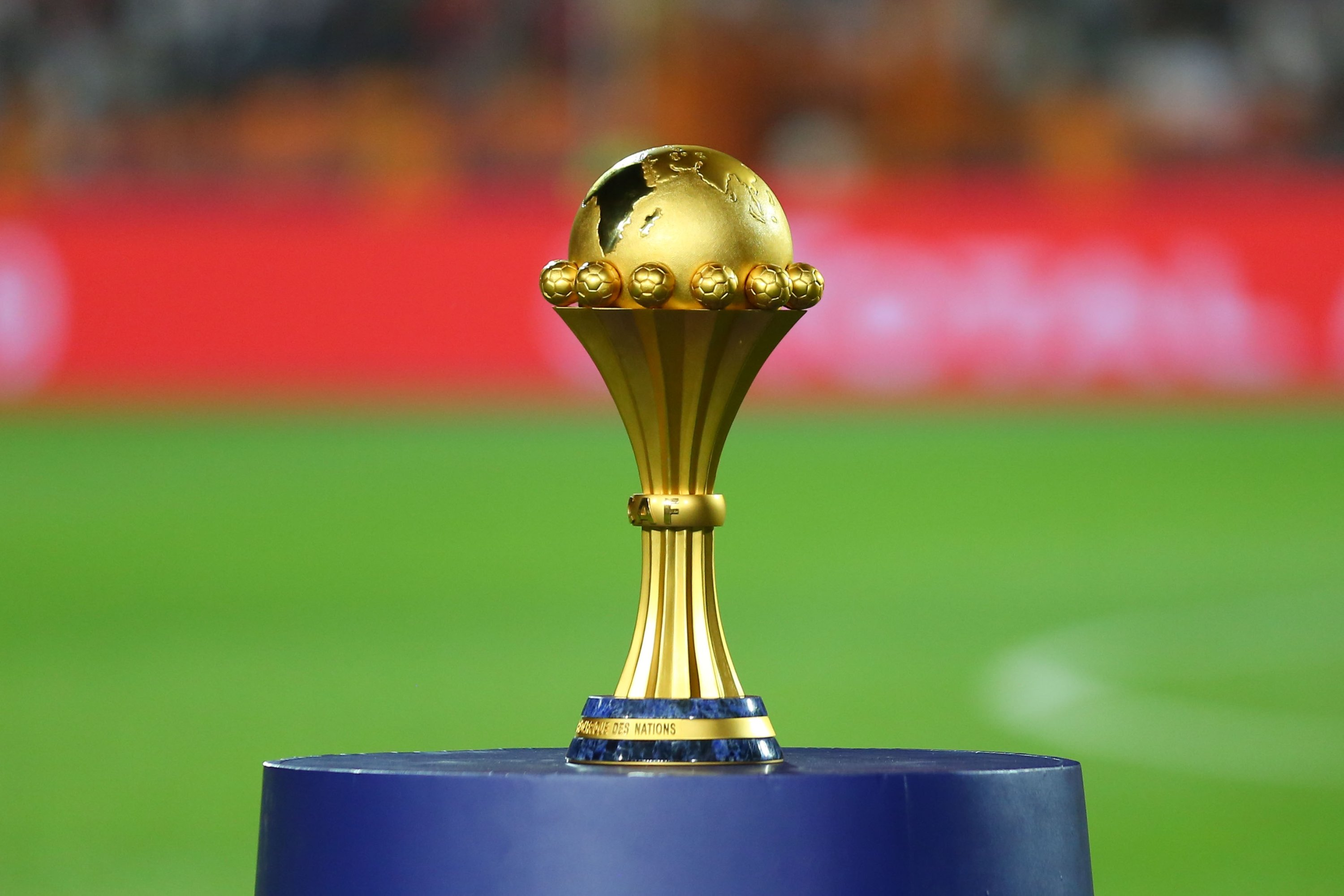
The match eventually resumed. Senegal won 1-0 after extra time through Sadio Mané. The trophy was handed over in Rabat. The champagne was poured. But the law, as it turned out, had not yet spoken.
The Legal Reckoning: You Cannot Outrun the Rulebook
In sports law, walking off the pitch without the referee’s authorization is not a dramatic gesture — it is a textbook forfeit situation. The rules governing the Africa Cup of Nations are unambiguous on this point: abandon the field without authorization, and the result is an automatic 3-0 defeat by forfeit. No grey area. No room for interpretation. Every federation, every coach, every player accepts these rules the moment they enter a CAF competition.
On January 28, the CAF Disciplinary Jury issued its first ruling — and chose restraint over principle. Rather than applying the forfeit sanction, the panel handed out fines and suspensions: Pape Thiaw banned for five matches, the Senegalese Football Federation fined $615,000 for the conduct of its players, staff, and supporters, and the Moroccan Federation fined $315,000 for infractions on their own side — including ball boys interfering with play, laser use by supporters, and an unauthorized intrusion into the VAR zone. Morocco’s formal request for a forfeit ruling was rejected.
The Moroccan Football Federation appealed. On March 17, 2026, the Appeals Jury did what the first panel had not: it applied the rule as written. Morocco was officially declared the CAN 2025 champions by forfeit. The title was stripped from Senegal. The Senegalese federation announced its intention to bring the case before the Court of Arbitration for Sport. The legal prognosis is not encouraging for them the CAS overturns sporting decisions only on grounds of procedural error, manifest arbitrariness, or grossly disproportionate sanctions. None of these thresholds are clearly met here.
As sports law specialist Patrick Rode stated plainly in the aftermath: “Leaving the pitch equals a clear violation of the rules. The sanction is explicitly prescribed. Emotion is not the law.” The rulebook won. It generally does.
Law, Order, and Trauma: What the Rulebook Cannot Heal
And yet. There is a dimension to this story that legal texts alone are unequipped to capture — and it would be a disservice to the millions of people who lived through this final to ignore it.
Moroccan psychotherapist Ghizlaine Chraibi published a piece in the immediate aftermath of the final titled “Pardon aux Marocains” that stands as one of the most remarkable pieces of writing to emerge from this entire saga. It deserves to be read not as commentary, but as a clinical document. Writing from the discipline of trauma psychotherapy, Chraibi does something rare: she takes what happened on that pitch and translates it into the language of the human nervous system — with surgical precision and genuine compassion.
Her central argument is both simple and profound. “Symbolic law,” she writes, “is not an abstract regulation. It is what founds the social bond. It guarantees that brute force does not make law, that transgression calls for a limit, and that everyone is subject to the same framework.” When an authority figure — a referee, an institution, a governing body — fails to enforce that limit visibly and firmly, the damage extends far beyond the scoreline. The message absorbed by every person watching, consciously or not, is corrosive: those who respect the rules are exposed; those who break them gain power. That inversion of order is not merely frustrating. It is, as Chraibi demonstrates, deeply and measurably traumatizing.
Neuroscience supports her entirely. Witnessing repeated, unsanctioned injustice activates the same neural circuits as those of the direct victim — mirror neurons, the amygdala, the autonomic nervous system all fire in the same pattern. The cold silence that fell over Moroccan supporters in the stadium, the collective sense of humiliation, the helpless fury: these are not the reactions of disappointed fans. They are clinical markers of collective trauma, experienced in real time by an entire people.
This is precisely why the March 17 ruling carries a weight that transcends sport. It represents what Chraibi calls restorative justice — not revenge, not a settling of scores, but institutional repair. “When an injustice has been experienced publicly and collectively,” she writes, “only a clear institutional recognition allows the nervous system to exit its state of paralysis.” The Appeals Jury’s ruling was, in this sense, not only a legal act. It was a therapeutic one.
Chraibi closes her piece with a warning that should sit uncomfortably with every governing body in world football: without a firm symbolic law, without a protective authority willing to enforce limits regardless of political or diplomatic pressure, sport ceases to be a space of encounter and collective meaning — and becomes a stage where anything goes, and where the strongest, loudest, and most brazen prevail. The CAN 2025 final came dangerously close to proving her right.
The law intervened. Late, but it intervened. And as Chraibi wrote with quiet force in her conclusion: this was never, and could never have been, “just football.”