

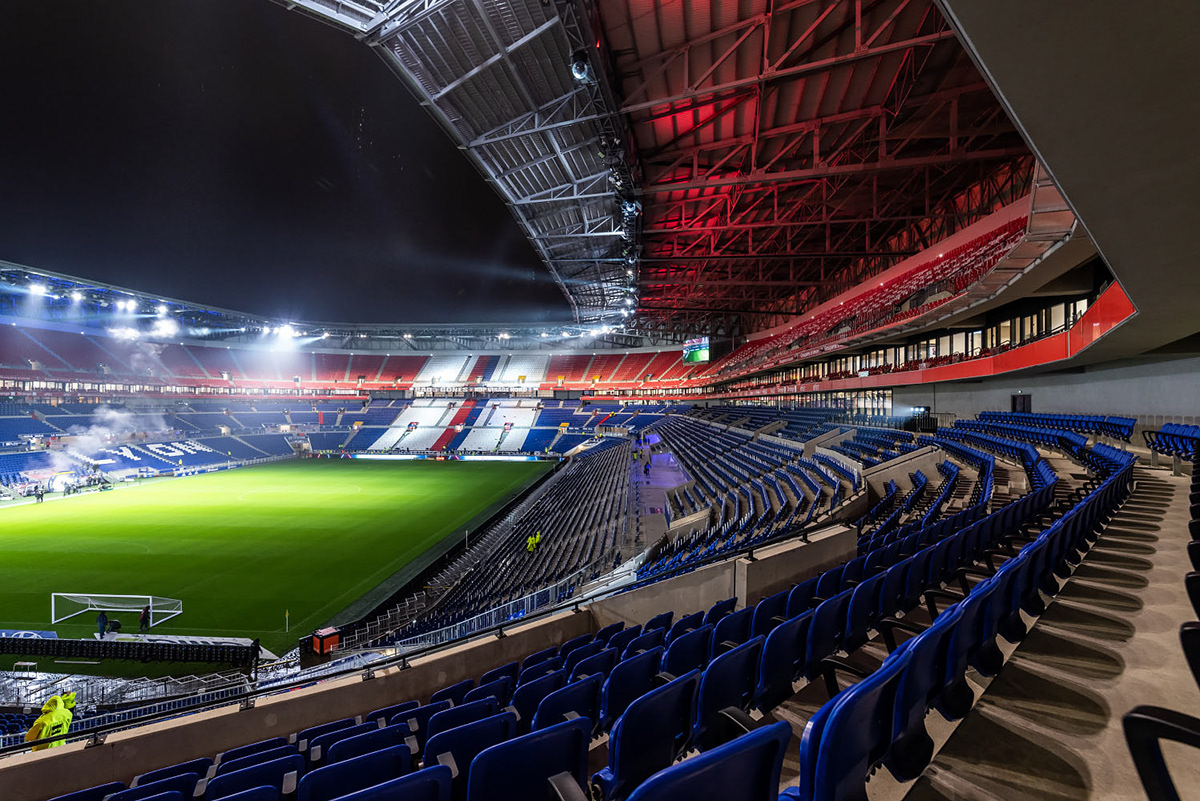
The Textor era at Olympique Lyonnais is over. But the financial wreckage it leaves behind is just getting started.
When John Textor walked into the Groupama Stadium in December 2022 as Lyon’s new owner, he did so with an €884 million valuation, an ambitious multi-club vision spanning France, England, Belgium and Brazil, and a promise to return one of Europe’s most storied clubs to its former greatness. What he didn’t advertise quite so loudly was the financing structure holding the whole thing together — a stack of high-interest loans from Ares Management that, from the very first day, gave the fund more leverage over Eagle Football Holdings than most people realised.
Three years later, Textor is out. Ares is circling. And Lyon’s survival has come down to one of the most dramatic debt restructuring stories in recent European football history.

The Debt That Was Always the Story
To understand what happened at Lyon, you need to start with the money Textor actually used to buy it.
Ares Management — a $400+ billion alternative asset manager and one of the largest players in private credit globally — financed the Eagle Football acquisition with nearly $493 million in loans. But these weren’t standard acquisition loans. They were mezzanine-style, high-risk instruments, priced accordingly: $300 million at 16%, $135 million at 18%, and a further tranche at 19.4%.
Those numbers tell you everything. When a lender prices debt at 19%, they’re not expressing confidence in the borrower — they’re pricing in a very real probability of default and demanding to be compensated for it upfront. Ares wasn’t acting as a traditional bank here. They were deploying opportunistic credit, the kind of capital that goes where conventional lenders won’t, and charges a premium for the privilege. In the private credit world, this is entirely legitimate. But it means the margin for error was essentially zero from day one.
The irony is that this structure — ambitious owner, leveraged acquisition, predatory lender in the background — is the same one that eventually delivered AC Milan to Elliott Management in 2018, and Inter Milan to Oaktree Capital in 2024. Textor had front-row seats to both. He built his financing the same way regardless.
When the Wheels Came Off
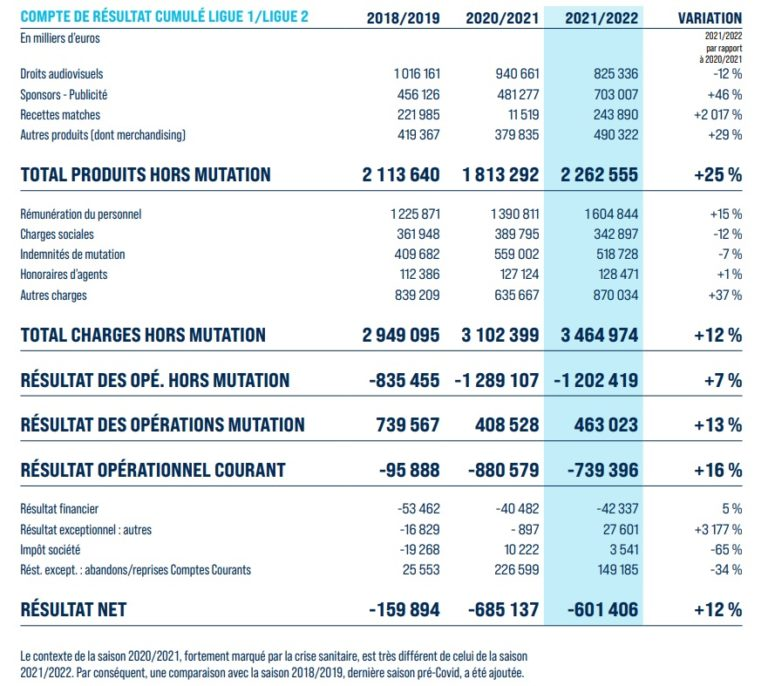
By late 2024, Lyon’s total debt had reached €505 million. The DNCG — the French football financial watchdog, which has real teeth unlike many of its European equivalents — provisionally relegated the club in November, imposed a salary cap and a transfer ban, and gave Textor a final deadline to fix the balance sheet or face the drop.
His response was characteristically bold and characteristically insufficient. He sold Rayan Cherki to Manchester City for €42.5 million. He offloaded Alexandre Lacazette and Anthony Lopes to cut the wage bill. And in a move that would prove fateful, he agreed to sell his 43% stake in Crystal Palace to New York Jets owner Woody Johnson for around $254 million — with the proceeds flowing directly back to Ares, reducing the outstanding loan balance.
In June 2025, the DNCG upheld the relegation anyway. Textor called it « incomprehensible. » The regulator called it arithmetic.
Lyon immediately appealed, installed Washington Spirit owner Michele Kang as club president in Textor’s place, and on July 9th 2025, secured a reversal of the relegation decision. The club would remain in Ligue 1 — but under strict supervision, with salary and transfer activity monitored directly by the DNCG.
The crisis had been survived. The underlying problem had not been solved.
The Boardroom Coup
What happened next was the part nobody saw coming — or perhaps everyone should have.
Behind the scenes, according to subsequent filings and reporting, Ares had already begun working with Kang directly. The fund’s position was straightforward: Eagle Football had defaulted on approximately $450 million of loans in October 2025. The remaining outstanding balance stood at roughly $250 million. And Ares — having already recovered around $200 million through the Crystal Palace sale — was done being patient.
On January 27th 2026, Textor tried to take it all back. At a board meeting of Eagle Football Group, he attempted to remove two independent directors — Stephen Welch and Hemen Tseayo — and reassert control of the holding structure. The move failed. Ares responded immediately by formally removing Textor as a director of Eagle Football Holdings Bidco, citing covenant breaches he disputes ever occurred.
Within days, Ares activated a repayment clause on the remaining $250 million. Pay within two weeks, or face forced sale of Olympique Lyonnais — or Ares takes direct control of the club itself.
Textor, fighting on multiple fronts — including a FIFA transfer ban on Botafogo and ongoing legal challenges in Brazil — accused Ares of acting as a « predator, » of orchestrating a secret agreement with Kang, and of seizing the club through illegal means. He filed a complaint with France’s financial markets regulator, the AMF, alleging Ares had taken over a listed entity without due process.
Ares, for their part, said they would defend their position through legal channels. Eagle Football reported a net loss of €200 million for the financial year ended June 2025. The fund’s patience, if it ever truly existed, had expired.
The Playbook We’ve Seen Before
What makes Lyon so instructive for anyone watching where finance and football are converging is how familiar the structure looks in retrospect.
Private credit firm extends high-cost acquisition finance to ambitious owner. Club underperforms financially. Owner struggles to service debt. Lender exercises rights, takes control, and either sells or restructures. Elliott at Milan. Oaktree at Inter. Now Ares at Lyon.
The difference here is the degree of chaos — multiple clubs, legal disputes across three continents, a public boardroom war, and a regulator-forced management change all running simultaneously. But the financial logic is identical.
What Ares ultimately wants is the same thing every private credit fund wants: return of capital, with interest. Their ideal outcome isn’t to run a French football club indefinitely. It’s to recover their $250 million, whether through a forced sale of Lyon to a third-party buyer, through Kang assuming formal control with a financing structure that lets Ares exit cleanly, or through some combination of the two.
The CashOnThePitch Verdict
Lyon’s story is ultimately a cautionary tale about the gap between ambition and structure.
Textor’s vision — a global multi-club platform competing at the top of European football — wasn’t inherently foolish. Multi-club ownership is real, it works, and serious capital is flowing into it. But the financing architecture underneath Eagle Football was fragile by design: high-interest debt, cross-collateralised across illiquid assets, with no clear path to profitability fast enough to service the interest burden before the lenders lost patience.
The DNCG nearly sent Lyon down. Ares eventually sent Textor out. And the club — seven Ligue 1 titles, a Champions League semi-final just five years ago — now enters a new chapter under Kang, still technically under DNCG supervision, with the debt question still unresolved.
If Kang can stabilise the balance sheet, establish a credible path to sustainable operations, and negotiate a clean exit for Ares, Lyon could emerge from this — as Inter did under Oaktree — as a leaner, better-governed club. The upside is real.
But if the legal war between Textor and Ares drags on, if the $250 million demand forces a rushed sale, or if the DNCG tightens the leash further, Lyon could find itself in a position where the football almost becomes incidental — a revenue stream to be optimised for creditors rather than a project to be built for fans.
In Ligue 1, that’s not a hypothetical. Bordeaux already showed what the end of that road looks like.