The World Cup is not just the biggest event in football; it is one of the biggest money machines in all of sport. Every four years, billions of dollars move through one tournament. FIFA gets rich. Broadcasters get rich. Sponsors get rich. Betting companies get rich. Even airlines, hotels, and shirt makers get rich. This article breaks down exactly where the money comes from and who ends up with it.
FIFA: the tournament is basically the whole business
Look at how much money FIFA has made from each World Cup cycle (the four years between tournaments):
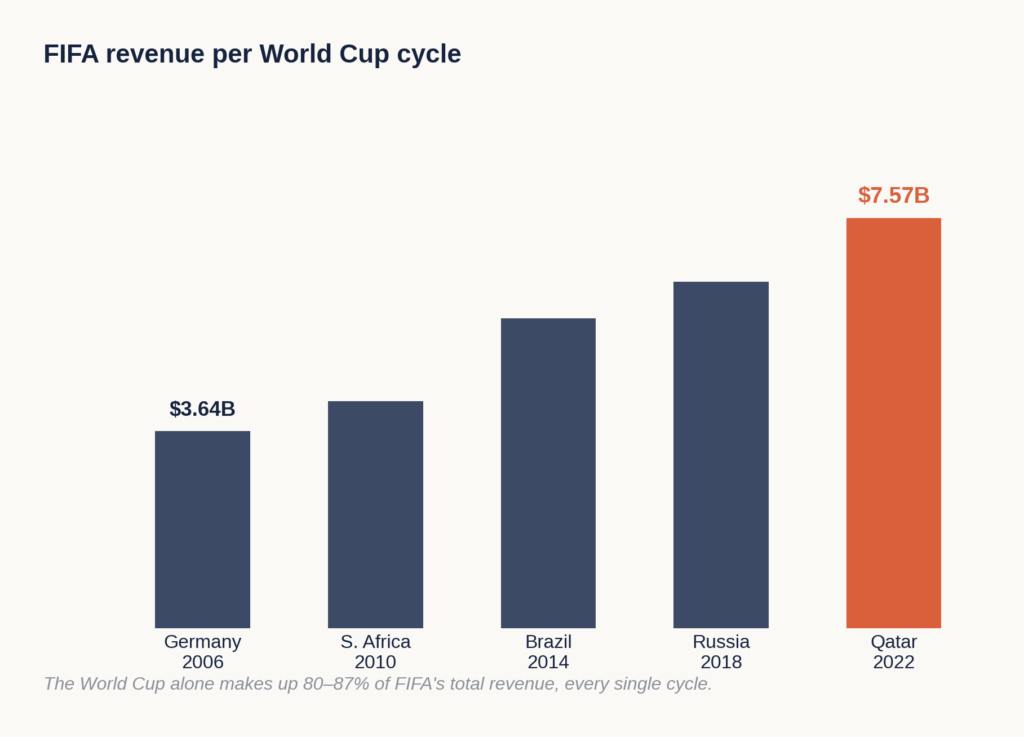
- Germany 2006: $3.64 billion
- South Africa 2010: $4.19 billion
- Brazil 2014: $5.72 billion
- Russia 2018: $6.4 billion
- Qatar 2022: $7.57 billion, the biggest cycle ever
That growth is impressive on its own. But the most relevant insight: for 20 years straight, between 80% and 87% of FIFA’s entire revenue has come from one single tournament. Not club competitions, not qualifiers, not youth football. Just the men’s World Cup. FIFA is, in practice, a business built around one product that happens once every four years.
Broadcasting: the biggest slice of the pie
Broadcast rights are FIFA’s single largest source of money, by far. During the Qatar cycle, FIFA made $4.64 billion from broadcasting alone, which accounts for 61% of everything FIFA earned in those four years. That one number is bigger than FIFA’s entire revenue during the 2006 cycle.
Why do broadcasters pay so much? Because live sport is one of the last things people still watch in real time. The 2022 final between Argentina and France reached 1.5 billion viewers worldwide… close to one in five people on Earth.
That demand shows up in the prices. Fox paid $425 million for the English-language US rights to both the 2018 and 2022 World Cups. For 2026, the combined English and Spanish rights package to Fox is reportedly worth $1.1 billion. Part of that jump is simple math, as the tournament has grown from 32 teams and 64 matches to 48 teams and 104 matches, a 62.5% increase in games to sell.
But growth is not automatic everywhere. Because the 2026 World Cup is hosted in the US, kickoff times are terrible for Asian audiences. FIFA reportedly wanted $60–100 million for the rights in India, but some broadcaster bids came in under $20 million. It is a reminder that even the biggest event in sport does not sell itself in every market. Time zones matter.
Sponsors: paying for the World Cup, not for FIFA
Qatar 2022 had 7 top-tier sponsors: Adidas, Coca-Cola, Wanda, Hyundai/Kia, Qatar Airways, Visa, and Qatar Energy. For 2026, most of those names return, joined by Lenovo, Aramco, and a new « official prediction market partner. »
FIFA does not publish exact sponsorship figures, but industry estimates suggest each top-tier sponsorship slot is worth $75–100 million per four-year cycle. Adidas’s long-term FIFA deal is reportedly worth up to $95 million across a cycle, and Hyundai’s was valued at around £182 million.
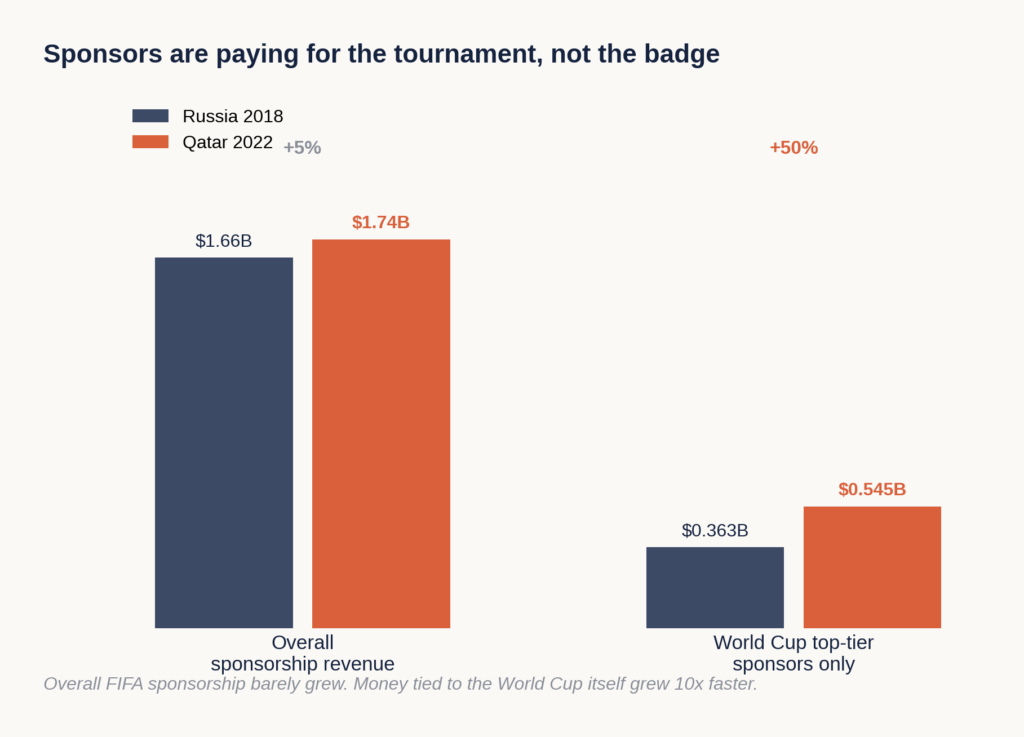
Here’s the most interesting detail: FIFA’s total sponsorship revenue only grew by about 5% between the Russia and Qatar cycles. But revenue from the top-tier World Cup sponsors specifically grew by 50%, from $363 million to $545 million. In other words, brands are increasingly paying for access to the World Cup itself, not for a general association with FIFA.
Tickets: where fans feel it directly
During the Qatar cycle, FIFA made $712 million from ticket sales and hospitality. For 2026, some early hospitality packages have already been listed at over $70,000. As prices climb, so does the amount of ticket fraud around the tournament… fake resale sites, fake hospitality deals, and phishing emails pretending to be from FIFA. It’s worth being extra careful when buying anything World Cup-related online.
Hosting: the one place where nobody is guaranteed to make money
FIFA takes almost no financial risk. Host nations take on enormous risks. Look at how hosting costs have grown:
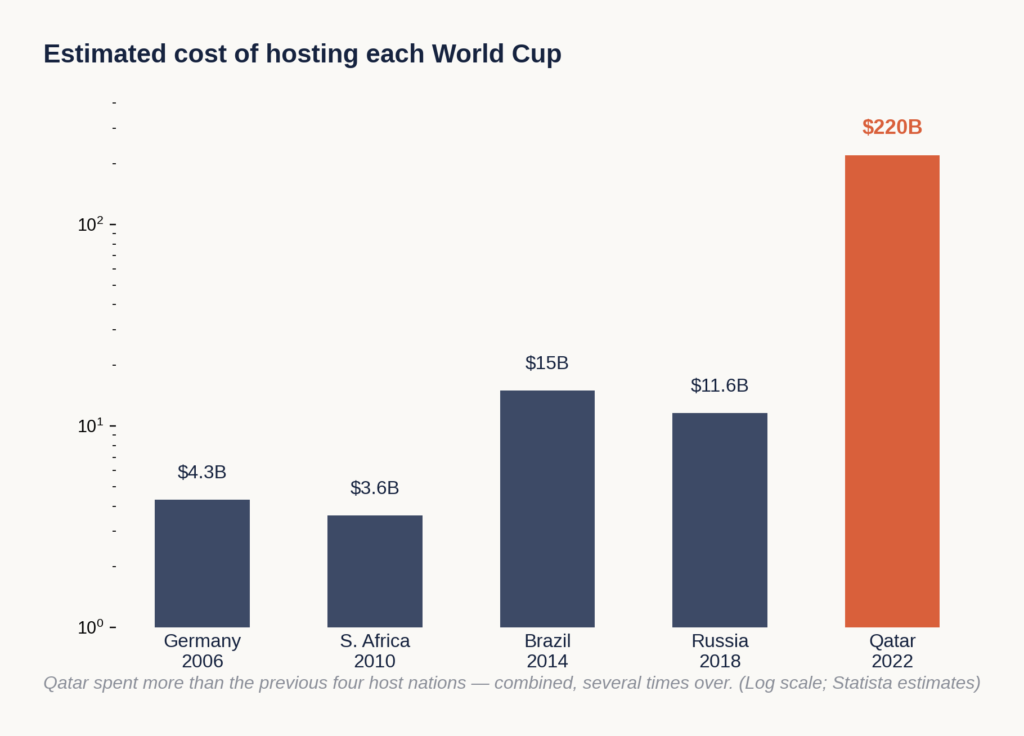
- Germany 2006: around $4 billion
- South Africa 2010: similar
- Brazil 2014: sharply higher
- Russia 2018: higher again
- Qatar 2022: an estimated $220 billion, roughly 20 times what Russia spent
Qatar’s number is so large partly because the country built stadiums, roads, an airport, hotels, an entire metro system, and new districts from scratch. Supporters say that spending was a long-term national investment disguised as a football budget. Critics say much of it was oversized and driven by image rather than need. Well, both arguments have some truth to them.
The 2026 tournament is different. The US, Canada, and Mexico are not building new infrastructure. All 16 host stadiums already existed, many of them NFL venues that already host bigger weekly crowds than a typical World Cup match. That means 2026 should cost dramatically less than Qatar but the real question is by how much, and we won’t know until the final numbers come in.
Do players actually get paid?
Most fans assume playing for your country is purely an honour, with no direct pay. That’s mostly true, but two separate financial systems are running underneath the World Cup.
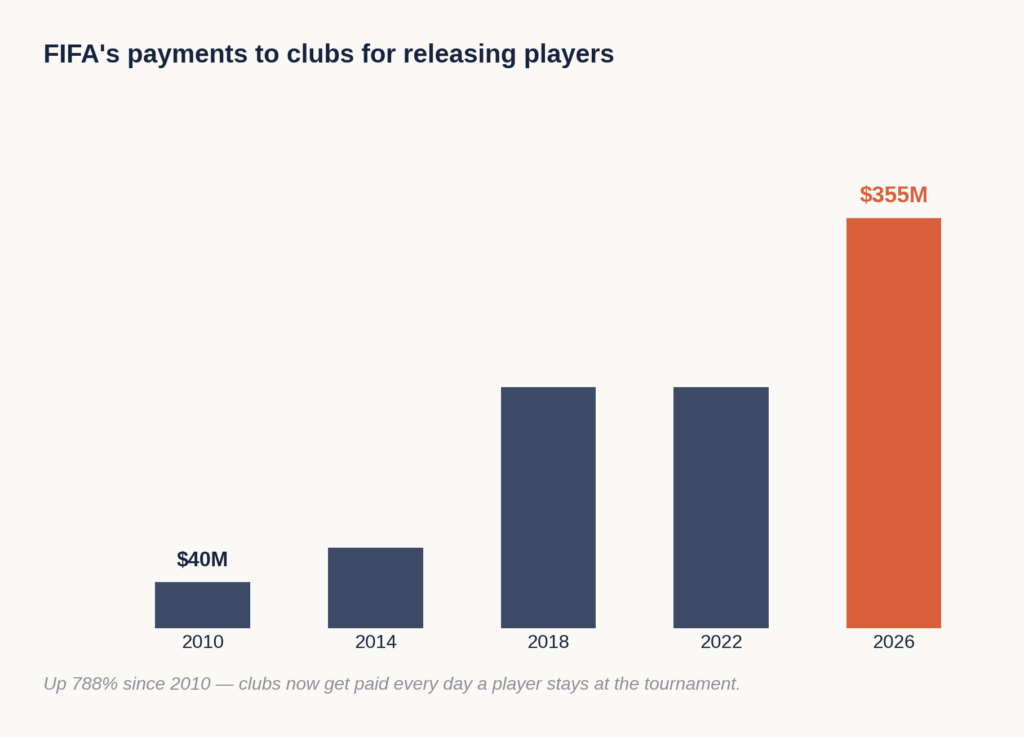
1. The FIFA Club Benefits Program. FIFA doesn’t employ the players; their clubs do. So FIFA compensates clubs for releasing players to the tournament. This pool has grown fast:
- 2010: $40 million
- 2014: $70 million
- 2018: $209 million
- 2022: $209 million
- 2026: $355 million (confirmed), a 788% increase since 2010
For Qatar, FIFA split its pool across every player’s total days at the tournament, working out to roughly $10,950 per player, per day. Even more interesting: the payment doesn’t only go to a player’s current club. It’s split across every club that the player was registered with over the previous two years, so smaller academy clubs can sometimes receive a surprise windfall years after developing a player they’ve since sold.
2. Prize money. This money goes to national federations, not directly to players. Federations then decide how much to pass on as bonuses. The total prize pool has grown steadily:
- 2006: $266 million
- 2014: $358 million
- 2018: $400 million
- 2022: $440 million, the largest ever
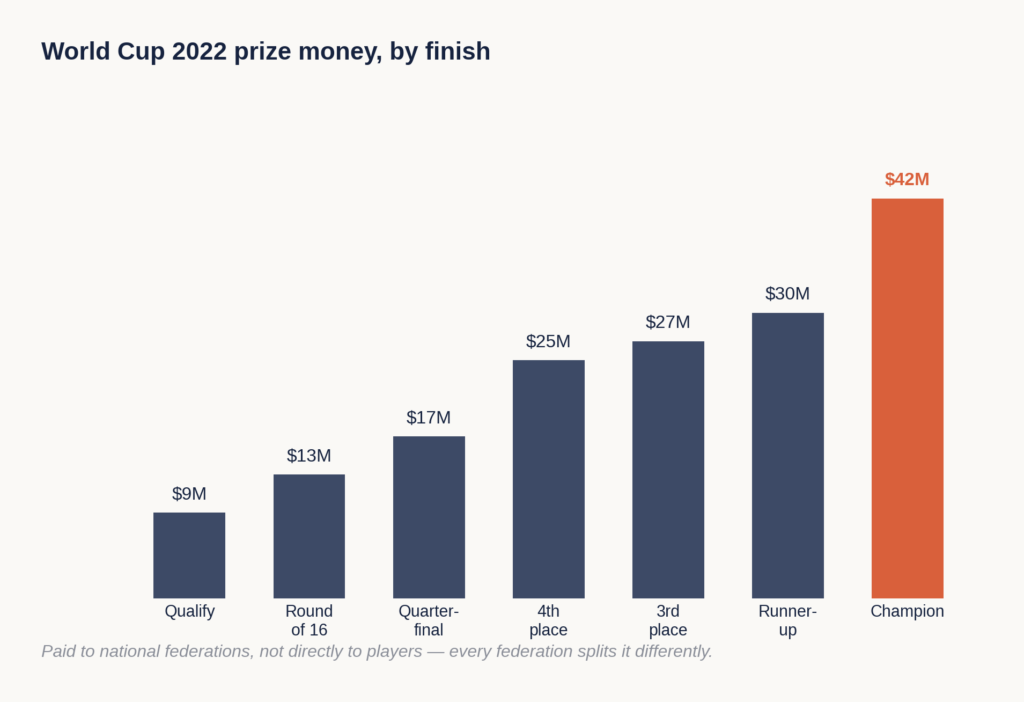
For Qatar 2022, the breakdown by stage was: $9 million just for qualifying, $13 million for a Round of 16 exit, $17 million for the quarterfinals, $25 million for 4th place, $27 million for 3rd place, $30 million for the runner-up, and $42 million for champions Argentina.
For 2026, every single qualified federation is guaranteed at least $10.5 million ($9 million in participation money plus $1.5 million for preparation). For established football nations like England or France, that’s a rounding error. For first-time qualifiers like Haiti, Curaçao, or Cape Verde, it can be genuinely transformational with new facilities, new coaching investment, new travel budgets, etc.
Where players really get rich: fame, not fees
The biggest financial reward for players usually isn’t tournament pay but it’s what happens to their market value afterward. A great World Cup can change a career overnight:
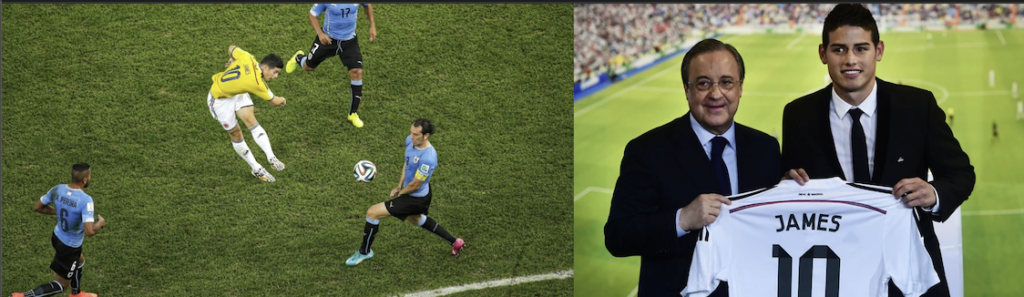
- James Rodríguez was at Monaco before the 2014 World Cup. Six goals later, including his famous volley against Uruguay, Real Madrid signed him for €80 million weeks after the tournament.
- Enzo Fernández joined Benfica for roughly €14 million before starring for World Cup winners Argentina in Qatar. Chelsea signed him a few weeks later for a British transfer record of £106.8 million.
- Sofyan Amrabat was a key part of Morocco’s historic run to the Qatar semi-finals, and it turned him into one of the tournament’s breakout names, eventually landing him at Manchester United.
- Kylian Mbappé was already a rising star before Russia 2018, but that tournament, at just 19, turned him into a global superstar and unlocked the scale of endorsement deals he has today.
The lesson: a few good weeks on the biggest stage in the sport can be worth more than years of club wages.
Betting and prediction markets: the new money in the room
As you may know, in 2026, gambling isn’t limited to traditional betting; prediction markets are entering the mainstream for the first time. In the US, Kalshi and Polymarket let people trade on the outcome of real-world events, including football results. Kalshi’s valuation went from $2 billion to $22 billion during 2025 alone. Polymarket is reportedly seeking new funding at a $15 billion valuation.
FIFA now has an official prediction market partner in its top sponsor tier: a company called ADI Predict Street, built on something called the ADI blockchain. There is almost no public information about this company, and its own website reportedly isn’t even live yet. With 104 matches and millions of users expected to trade on outcomes, these platforms could end up among the biggest financial winners of the entire tournament, priced like tech companies rather than betting companies, which lets them spend far more aggressively on marketing.
Everyone else takes a slice too
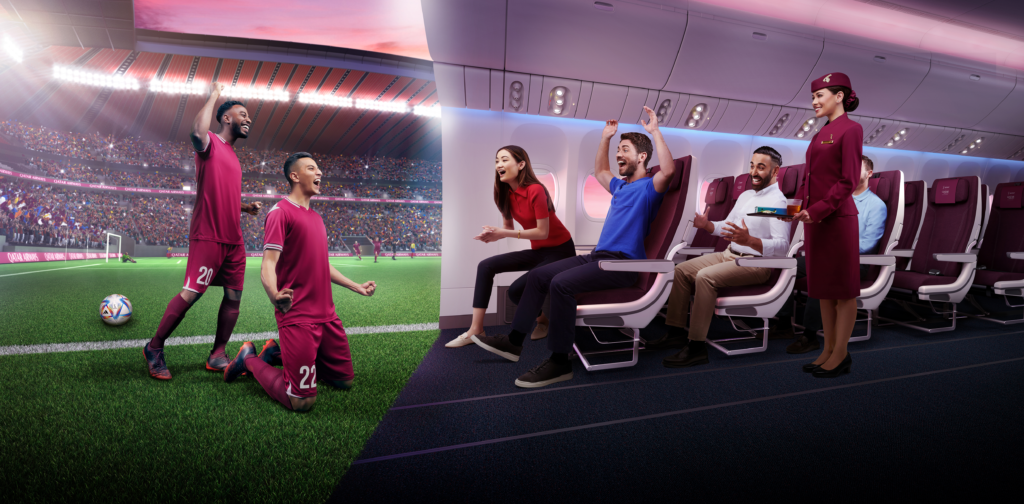
- Airlines and tourism: Qatar had 2.56 million visitors in all of 2022, but 1.18 million of them arrived during the World Cup window alone, so nearly half the country’s annual tourism in a few weeks. By August 2023, Qatar had already matched its entire previous year’s tourism total. Qatar Airways, a FIFA sponsor, was a major beneficiary.
- Kit manufacturers: After Argentina won in 2022, Adidas sold out of Messi shirts globally, and its overall football sales grew 30% that year. Ahead of 2026, Adidas has already booked around €250 million in World Cup product orders in Q1 alone, with another €250 million expected in Q2, roughly half a billion euros in World Cup merchandise before a ball has been kicked.
- Payment companies: During the opening weekend of the 2014 Brazil World Cup, international visitors spent over $27 million on Visa cards, a 73% jump from the year before. By the end of the group stage in Qatar 2022, Visa spending at official World Cup venues had already reached 89% of the entire 2018 tournament’s total spend, before the knockout rounds had even finished.
Add in hotels, security firms, event staffing, and private transport, and the pattern is obvious: for a few weeks, an entire local economy temporarily reshapes itself around the tournament.
The bigger picture
The World Cup isn’t really one event. It’s a four-year business cycle disguised as a football tournament. FIFA takes almost none of the risk and most of the reward, host nations gamble billions with no guaranteed return, and everyone from clubs to kit makers to prediction market startups builds their calendar around six weeks that come around once every four years. And with each cycle, the numbers only get bigger.