A £2.5 billion takeover. £1.5 billion in transfer spending. The largest single-season loss in Premier League history. And a private equity thesis that is now being stress-tested in real time.
When Clearlake Capital and Todd Boehly bought Chelsea for £2.5 billion in May 2022, the football industry was told to expect a new era. American capital, financial discipline, an end to the Abramovich-era model of an owner absorbing roughly £1 million a week in losses for two decades. The pitch to the market was simple: European football clubs trade at a structural discount to American sports franchises despite a much larger global fanbase, and Chelsea was an undervalued asset waiting for professional management.
Almost four years later, Chelsea has just reported a £262 million pre-tax loss for 2024/25, the largest single-season loss any Premier League club has ever recorded. The Clearlake-Boehly era has now produced deeper losses than the Abramovich era it was meant to replace. And the private equity playbook that was supposed to professionalise the club is being publicly questioned by football executives, fans, and increasingly, the financial press.
This isn’t a story about a bad season. It’s a story about what happens when a private equity thesis collides with the operational reality of running a football club.
The Capital Stack Nobody Talks About
To understand Chelsea’s position, you need to understand how the takeover was actually financed.
The headline number was £2.5 billion. But the structural piece that matters is what came after. Chelsea’s owners put in place a private equity-style financing arrangement centred on a $500 million payment-in-kind (PIK) note provided by Ares Management to the club’s holding company, 22 Holdco. The interest rate, currently 11.2%, doesn’t get paid in cash. It rolls up into the principal. As of June 2025, that principal had grown to £595.9 million, and the note matures in 2033. A separate entity in the ownership structure carries another £794 million in loans.
For readers familiar with our Lyon coverage, the Ares Management name should ring a bell. The same private credit fund that financed John Textor’s Eagle Football acquisition and ultimately moved to take control after default is Chelsea’s senior creditor as well. The structures are different, the situations are different, but the underlying logic is the same: deploy high-yield credit into football assets, secure attractive returns through interest accretion, and stand first in line if anything goes wrong.
A PIK note at 11.2% is not unusual in the private credit world. It is, however, unusual in football. What it means in practice is that Chelsea’s debt burden grows automatically every year regardless of whether the club is generating profits, qualifying for the Champions League, or selling players. The compounding works whether the team is winning or losing.

The Player-as-Asset Thesis
The most distinctive feature of the Clearlake-Boehly approach is how it treats the squad. Since the takeover, Chelsea has spent €1.7 billion on players, partly offset by €921 million in player sales, and in doing so has assembled what UEFA officially described as the most expensive squad in the history of the game.
The strategic logic is explicit: sign young, talented players on extremely long contracts (frequently seven or eight-and-a-half years rather than the standard five), amortise the acquisition cost across that longer period to stay within UEFA’s financial sustainability rules, and rely on resale value to eventually generate trading profits. In effect, the squad is being managed like an asset portfolio. Buy young, hold for appreciation, sell at a markup.
It’s the same accounting trick that allowed Chelsea to pay £62 million for Mykhailo Mudryk in 2023 and spread the amortisation over eight and a half years rather than five. It’s why the squad has expanded so dramatically, and why so many players are on contracts that, in any other industry, would look extraordinary.
The downside is that football isn’t a stocks portfolio. Players age, get injured, lose form, fall out with managers, or, in Mudryk’s case, get suspended for failed drug tests. A director at another Premier League club, quoted in the FT, captured the structural problem: a player on a seven-year contract either becomes complacent because his salary is locked in, or becomes trapped on a wage that the market has long since left behind. Either way, the resale value Clearlake is banking on becomes harder to realise.
The portfolio has produced winners (Cole Palmer, Estêvão) and losers (Mudryk, plus several signings already moved on at significant losses). What it hasn’t yet produced is a coherent first team. Co-founder Behdad Eghbali admitted as much this month, telling an industry conference that Chelsea now needs to « add more ready-made players », a quiet acknowledgment that the youth-portfolio thesis, in isolation, isn’t enough.

The Champions League Cliff
The single biggest variable in Chelsea’s near-term financial trajectory isn’t transfers, the stadium, or the PIK note. It’s whether the club qualifies for next season’s Champions League.
Champions League participation generated between €75 million and €80 million for Chelsea this season alone. To qualify for next season’s competition, Chelsea needs to finish in the Premier League’s top five. With six games to go, they sit sixth.
For a club generating £490.9 million in total revenue (up 4.8% in 2024/25) and projecting £700 million for the current financial year (boosted by the FIFA Club World Cup victory), losing €75-80 million of guaranteed Champions League income is not a marginal event. It’s the difference between an operationally profitable trajectory and a return to deep losses. It’s also the difference between Clearlake’s exit options widening or narrowing dramatically.
This is the part of the private equity thesis that no spreadsheet model fully captures. Sporting performance is the input variable that determines whether the entire financial structure works. Miss the top five, and the next refinancing conversation gets significantly harder.

The Stadium Question: £73 Million Per Year, Permanently
The most consequential financial decision Chelsea’s owners face has nothing to do with the squad and everything to do with bricks and mortar.
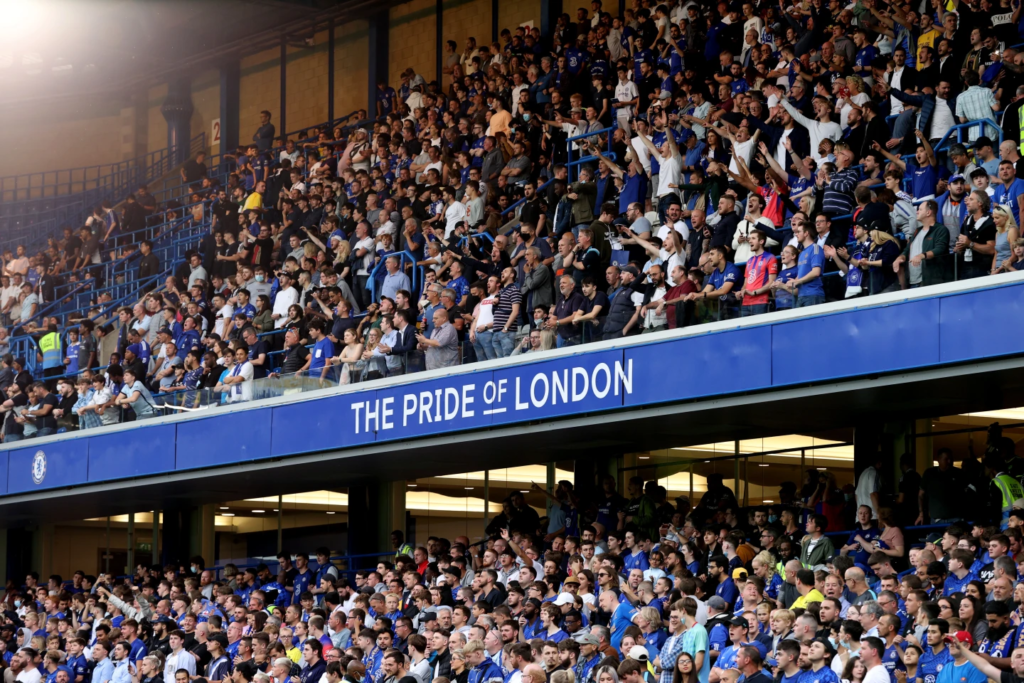
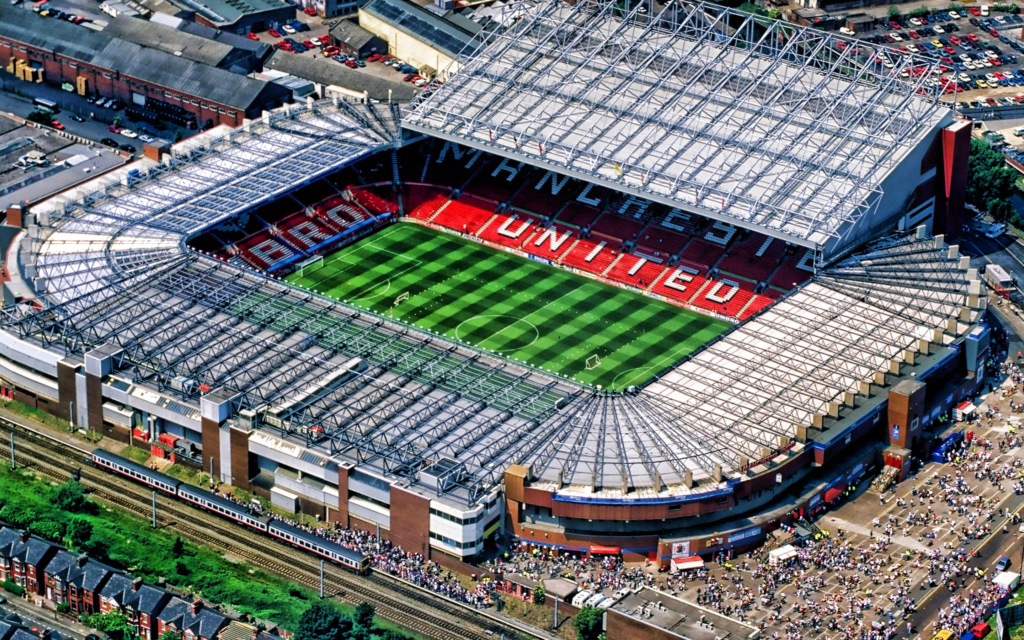
In 2024/25, Chelsea generated £86.7 million in matchday revenue from Stamford Bridge’s 40,000-seat capacity. Manchester United, by comparison, generated £160 million from Old Trafford’s 74,000 seats. That is a structural revenue gap of roughly £73 million per year, every year, for as long as Chelsea plays in its current ground.
Compounded over a decade, that’s nearly three-quarters of a billion pounds in foregone revenue. It is, in many ways, the single biggest reason a private equity owner would acquire Chelsea in the first place: the matchday upside is real, quantifiable, and trapped behind a capacity constraint.
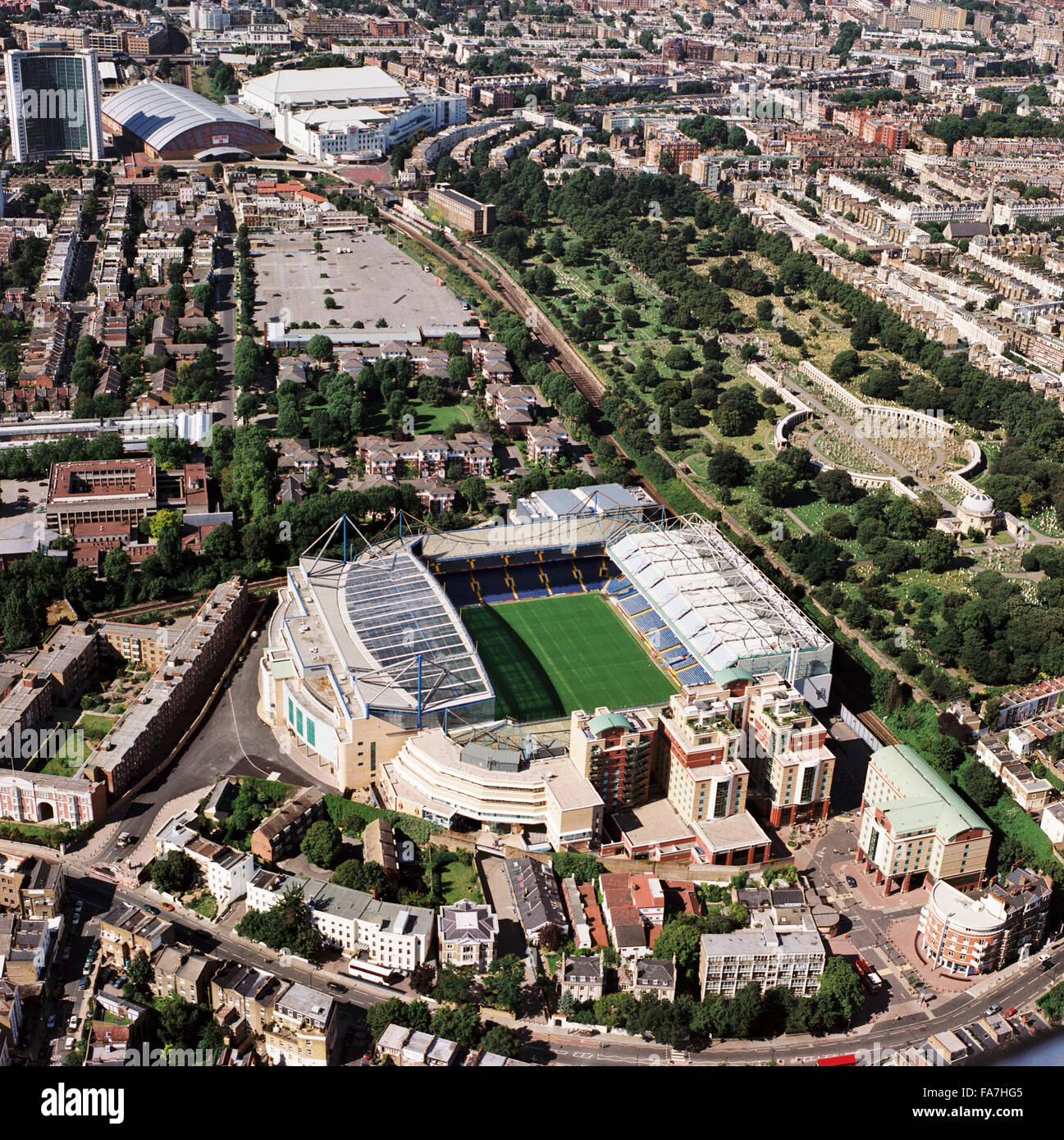
The problem is that Stamford Bridge sits on a small site hemmed in by railway lines and a cemetery in densely populated west London. Redeveloping it would require temporary relocation and a complex construction project. The alternative was Earl’s Court, a mile up the road, but two councils have since approved a development plan for the site that doesn’t include a stadium. After nearly four years of ownership, Clearlake and Boehly still haven’t agreed on which path to take.
Football finance analyst Kieran Maguire put it bluntly in the FT: the longer the decision is delayed, the further Chelsea falls behind the clubs it wants to compete with. Every season without a clear stadium plan is another season where the matchday revenue gap with Manchester United, Tottenham, Arsenal, and Real Madrid widens rather than closes.
The Boardroom Friction
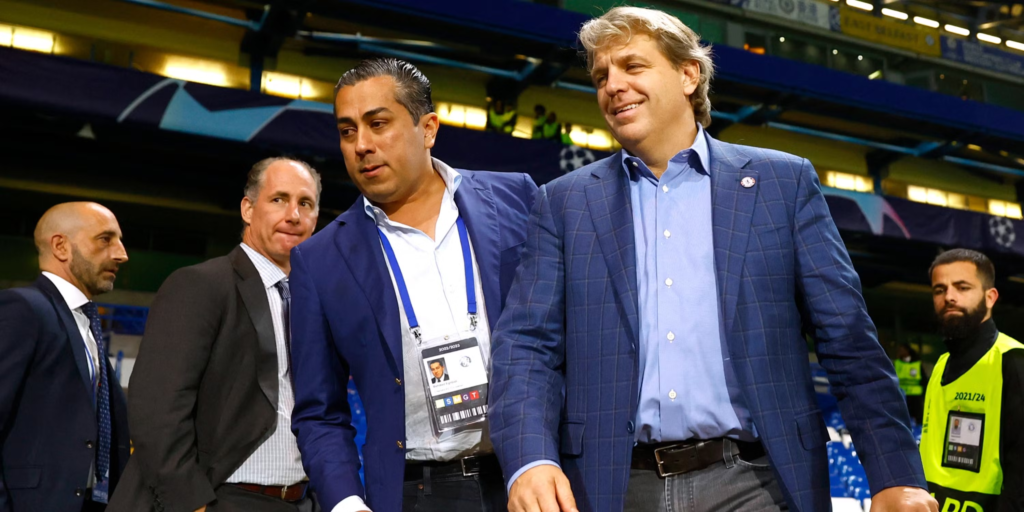
Underneath everything sits a question that the official statements try to suppress but the FT has now confirmed: Boehly and Clearlake have explored buying each other out.
A person close to the club describes the relationship as professional and productive. The reality, as reported, is that the two largest shareholders haven’t been able to align on the most basic strategic decisions, with the stadium question at the centre of the friction. Clearlake holds more than 60% of the equity and Eghbali has emerged as the dominant decision-maker, but Boehly remains a significant figure publicly and privately, and the divergence in vision has been visible.
Four head coaches in less than four years. Four years without a stadium plan. A first-team identity that fans no longer recognise, with just over half of respondents to a recent Chelsea Supporters’ Trust survey describing themselves as « very unconfident » that the club is being run for sustained on-pitch success.
This is the part of the private equity model that doesn’t translate well to football. PE structures work best when the operating asset can be optimised, restructured and exited within a defined timeline. Football clubs don’t operate on that timeline, and they don’t tolerate the volatility that comes with strategic disagreements between principal investors.

The CashOnThePitch Verdict
The Clearlake-Boehly thesis on Chelsea was financially coherent on paper. European football trades at a discount to American sports. Chelsea has a globally recognised brand and elite-level commercial potential. With professional management, financial discipline, and a portfolio approach to the squad, the asset should appreciate.
The execution has revealed a harder truth. Football clubs are not assets that respond well to financial engineering. The PIK note compounds whether the team wins or loses. The seven-year contracts amortise neatly on the balance sheet but create real squad management problems on the pitch. The portfolio approach to transfers produces winners and losers, but a first team needs experience, cohesion and identity, not just resale value. The stadium decision can be deferred indefinitely on a spreadsheet, but every deferred year is real revenue lost.
Clearlake and Boehly still hold £1.3 billion of their committed £1.75 billion of capital. They have time, runway, and powerful financial backing. The Club World Cup win and projected £700 million revenue line are real progress indicators. And if Chelsea sneaks into the top five and secures Champions League football for next season, much of the immediate pressure dissipates.
But the bigger question is whether the underlying thesis itself can be made to work. Whether a private equity ownership model, with its compounding debt, its portfolio logic, its multi-shareholder governance, and its eventual need for an exit, is actually compatible with the operational reality of an elite European football club.
Lyon couldn’t make it work under Textor. Inter only stabilised after Oaktree took direct control. Chelsea is the largest, most expensive, and most public test of the model so far.
The result of that test is still being written. With six games to go.