

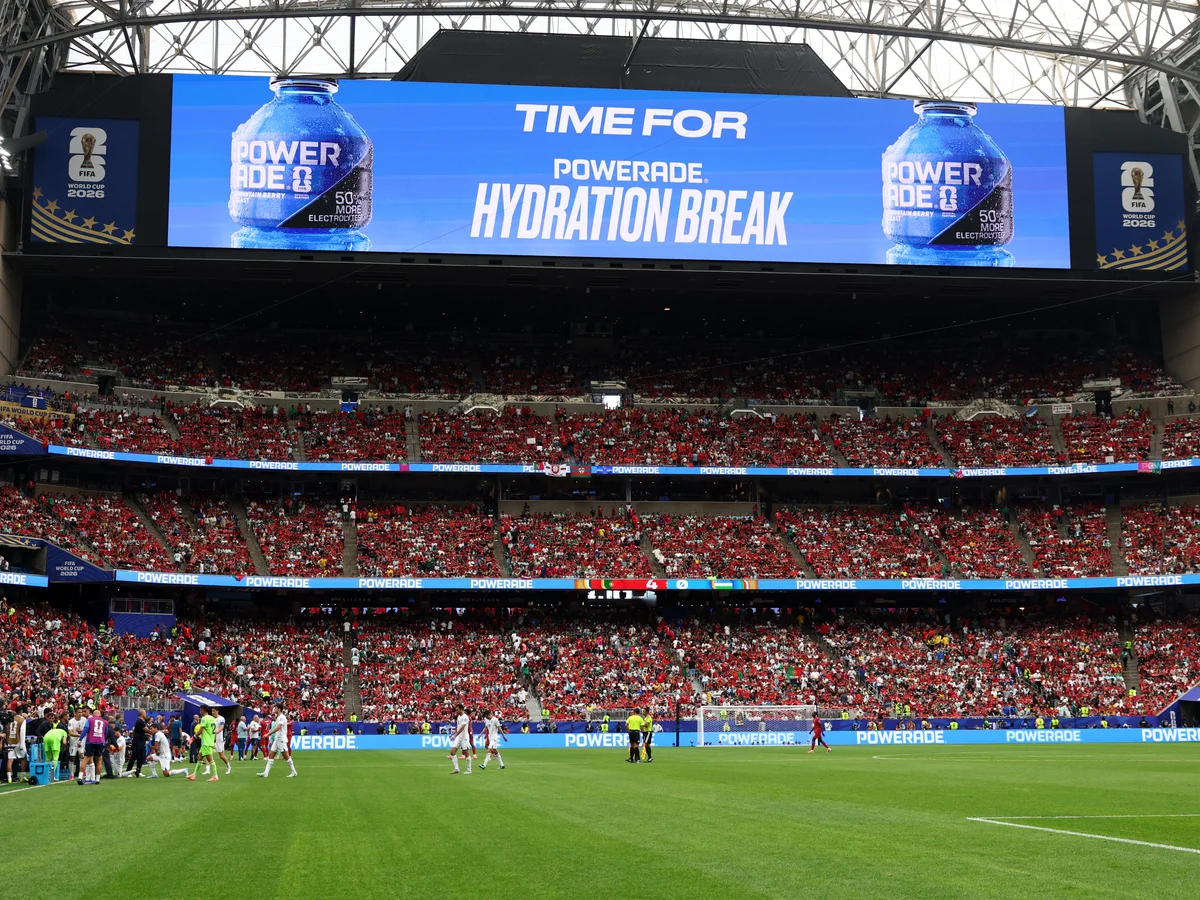
Three minutes. That’s how long play stops, twice a game, at every single one of the 104 matches at the 2026 World Cup. Multiply that out and you get roughly 624 minutes, more than 10 hours, of scheduled pause across the tournament. Officially, it’s about player welfare. Unofficially, it’s six extra minutes of broadcast inventory per match, conjured out of nothing, inside a sport that historically never stopped for ads.
The Rule That Changed the Game’s Shape
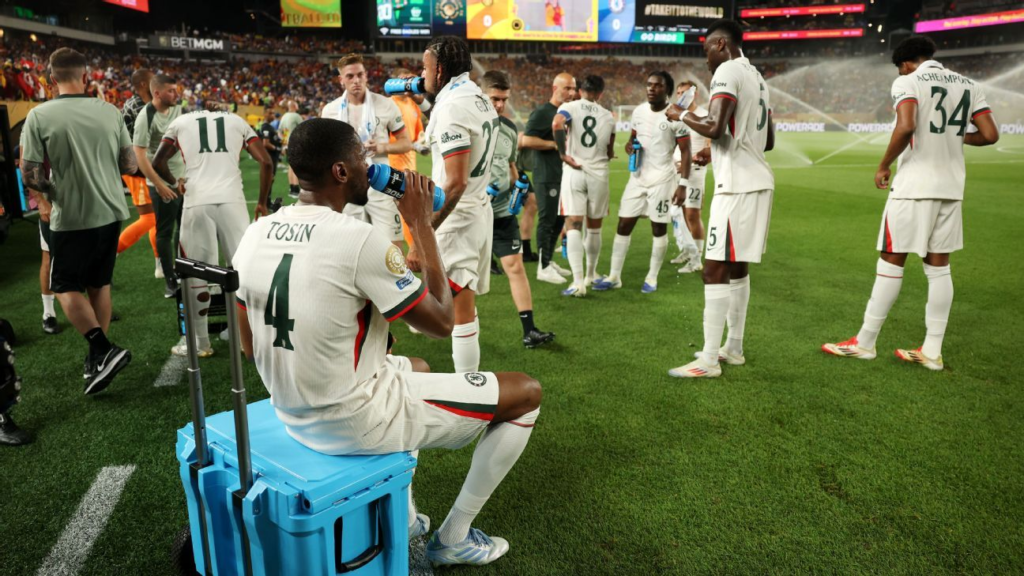
Hydration breaks aren’t new to football. Referees have paused matches for drinks during heatwaves before, but only at the referee’s discretion, or once a temperature threshold was crossed. What’s new in 2026 is that FIFA made the break mandatory, scheduled, and universal: one around the 22nd minute of each half, in every one of the 104 matches, regardless of venue or weather. Play in a closed, air-conditioned stadium in Seattle? Doesn’t matter. The break happens anyway.
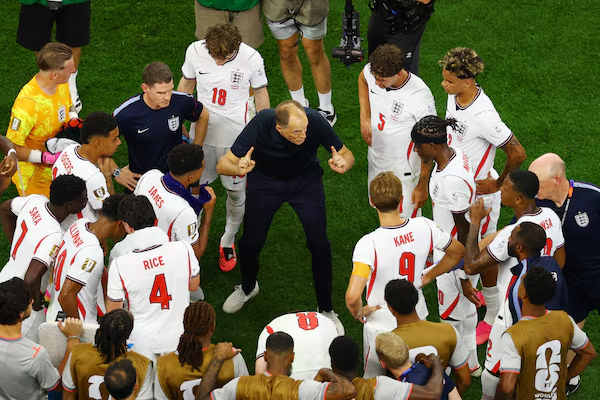
That decision has reshaped the match itself. Didier Deschamps called it « almost four quarters » instead of two halves. Virgil van Dijk has pointed to the inconsistency: breaks in cold stadiums just as much as hot ones. Emma Hayes now calls them « momentum breaks » rather than hydration breaks, since their real effect on the pitch has nothing to do with water and everything to do with letting a losing team regroup.
That’s the tactical story. The financial story is where the numbers get interesting.
The Ad Math, Slot by Slot
A 30-second World Cup ad slot on Fox Sports costs between $200,000 and $300,000, rising as high as $750,000 for USA matches and knockout-round games. A three-minute hydration break is six 30-second slots, before you even account for split-screen or sponsor-branded segments. At the higher end, that’s a single break worth up to $4.5 million in ad inventory, twice a game, 104 games.
Run the rougher math across the tournament and you can see why analysts at Ampere flagged hydration breaks by name as a new sponsorship category for 2026, alongside the expanded 11-minute half-time show. Industry estimates put potential US ad revenue generated specifically during hydration breaks at more than $250 million. That’s not FIFA’s broadcast deal, not sponsorship, not ticketing. That’s just the water break.
Put that figure next to the tournament’s overall numbers and the scale clicks into place. FIFA’s US media rights alone are up 94% from 2022, and Fox and Telemundo combined are projecting roughly $850 million in total advertising spend across their World Cup coverage. If hydration-break inventory is pulling in a quarter of a billion dollars of that in the US market alone, FIFA didn’t just add a sponsorship tier. It engineered close to a third of a billion dollars in incremental ad inventory by rewriting one rule about water.
Why the Timing Isn’t About the Weather
If hydration breaks were purely about heat, you’d expect them to track temperature. They don’t. Senior meteorologist Everton Fox pointed out that while cities like Miami, New York, and several Mexican venues genuinely needed the break, stadiums in Dallas, Houston, Atlanta, and Vancouver had no weather case for one at all, yet got the identical mandatory pause. His read: it’s hard to see this as anything other than a commercial decision worth potentially billions globally.
Players have noticed the same gap between rule and rationale. Canada’s Alistair Johnston called it a « hydration break turned into a commercial break, » adding that it’s probably making FIFA more money. Panama’s coach Thomas Christiansen, after a match in a mild 70-degree Toronto evening, put it even more plainly: television is what pays for all of this, and teams have to accept it.
That inconsistency is actually the tell, and it matters financially too. A break tied to temperature is an unreliable product, you can’t presell ad time against « maybe it gets hot enough. » A break that’s mandatory and identical in every match, in every stadium, is a reliable one. Standardizing the format is what let FIFA and its broadcast partners sell the inventory months in advance with a fixed price, rather than negotiating it match by match.
Context: A Small Piece of a Very Big Machine
To be fair to FIFA’s accountants, hydration-break ads are a rounding error against the scale of this tournament. The 2026 cycle is projected to generate around $13 billion in total revenue for FIFA between 2023 and 2026, with broadcast rights alone expected to land near $3.9 to $4.2 billion, up roughly 22% to 30% from the 2022 cycle. Sponsorship revenue is forecast above $2.4 to $2.8 billion, a jump of more than a third from Qatar. The expansion from 64 to 104 matches did most of that heavy lifting, handing broadcasters 62% more live content to sell against.
But that expansion came with a catch worth flagging for anyone thinking in margins, not just totals: per-match broadcast value has actually fallen, from roughly $53.6 million per match in 2022 to about $37.7 million in 2026, as the broader inventory diluted prices. That’s exactly why a guaranteed new ad format inside every match matters more than it looks. When the value of each match is shrinking, finding new ways to monetize the minutes inside that match, rather than the match itself, is one of the only levers left to defend the per-match number. Hydration breaks are a small, structurally clever offset to a real pricing problem.
The Viewer Pays the Price
Not every broadcaster is handling the break the same way, and that split says something too. Some kept the live pitch feed running, players drinking, coaches talking tactics. Fox cut to full-screen commercials, including during the Mexico vs South Africa opener, and viewers missed live action as a result. One approach protects long-term viewer goodwill; the other monetizes the break outright. Both are rational, they’re just optimizing for different time horizons.
There’s a cost here that doesn’t show up in any of the figures above: booing has become a recurring feature of the tournament every time the break begins, a real-time signal of audience friction that ad-revenue models don’t price in. If attention is the asset FIFA is monetizing, the open question is whether eroding the goodwill behind that attention gets discounted back into the deal, or just ignored until it shows up in the next broadcast negotiation.
The Bigger Picture
What’s interesting here isn’t really the money FIFA is making today. It’s the precedent it sets. Once a governing body learns that a « safety » rule can also be sold as ad space, that idea doesn’t stay contained to one tournament. Leagues and federations everywhere are watching how fans, players, and broadcasters react this summer, and if the backlash fades while the revenue stays, other competitions will likely copy the model in some form.
Football has always found ways to sell the space around the game: shirts, stadium boards, the halftime show. This is different because, for the first time, it’s selling time inside the game itself.
How much of football’s actual playing time are we willing to let become ad space before it stops feeling like the same sport?